

From Moodboard to Deliverable: Why Pipeline Stages Matter More Than Models
Art directors, illustrators, concept artists, and brand designers adopted generative AI faster than their studios could define where it belongs in the workflow. The first impulse was seductively simple: one subscription, infinite thumbnails, instant hero art. Within a sprint, the same teams were juggling moodboard generators, style-transfer experiments, inpainting suites, and upscale pipelines — while still exporting layered PSDs for client review and briefing freelancers for the final pass. The bottleneck was never access to pixels. It was stage mismatch: using exploration tools for production deliverables, or production polishers during week-one brainstorming when speed and divergence matter most.
Creative pipelines have always been staged, even before AI. Moodboards gather references and emotional tone. Concepts translate briefs into visual directions worth debating. Refinement locks composition, character, palette, and narrative detail under art direction. Deliverables meet technical specs — print bleed, animation rigging, game engine import, social crop ratios, legal clearance on likeness and text. Each stage optimizes for different outcomes: breadth versus coherence, surprise versus consistency, iteration speed versus reproducibility. Generative tools amplify whichever stage you point them at. Point them nowhere, and you amplify chaos.
The cost of mis-staging shows up in familiar frustrations. A team that runs deliverable-grade upscaling on rough moodboard thumbnails burns credits and gains false confidence in blurry directions. A team that keeps concept generators open through final approval invites style drift, unintended symbols, and unrepeatable happy accidents. A team that treats every output as disposable exploration never builds the reference chains that make AI useful for serialized work — comics, campaign mascots, environment kits, seasonal brand drops. Each mistake gets labeled "prompt engineering," but it is really wrong-stage tax.
Staging also clarifies creative ownership. When the pipeline is explicit, producers know whether they are gathering references, proposing directions, locking approved layouts, or exporting files engineering can ingest. Creative directors can set different critique languages at each gate — what feeling does this evoke? early, does this match the approved style bible? mid, will this survive print and localization? at the end. Legal and brand can apply different scrutiny. Finance can see which subscriptions serve exploration credits versus production seats. Pipeline-aware routing turns art AI from a novelty slot machine into infrastructure that respects how creative work actually ships.
This pillar maps tool classes to four stages — moodboard, concept, refinement, and deliverable — with decision criteria, handoff checkpoints, and failure signatures you can paste into Notion, Monday, or your studio wiki tomorrow. Tool names change monthly; stages do not. The goal is fewer heroic prompt wranglers and more predictable throughput for teams who still owe boards on Tuesday and final files on Friday.
The Four Creative Pipeline Stages and What Each One Optimizes For
Before assigning tools, name the stages by decision type, not by file format. Moodboard stage decisions are about association: what worlds, textures, palettes, and compositional instincts belong in the conversation. Concept stage decisions are about direction: which of those associations becomes a coherent visual proposal someone can approve or kill. Refinement stage decisions are about precision: composition locked, characters consistent, style repeatable, feedback from creative review incorporated without restarting. Deliverable stage decisions are about specification: resolution, color space, layers, naming, rigging, vector cleanliness, and downstream compatibility.
Each stage has a different tolerance for ambiguity. In moodboards, ambiguity is fuel — you want juxtaposition, tension, unexpected references that spark discussion. In concepts, ambiguity must shrink to choosable options; stakeholders should see distinct directions, not infinite variations of the same mush. In refinement, ambiguity is a defect; "interesting" is no longer enough when a layout must survive twelve asset sizes. In deliverables, ambiguity becomes a production incident — the wrong DPI, missing alpha, or unlicensed reference traceable in metadata.
Revision physics differ sharply across stages. Moodboards iterate in broad swaps: replace a reference column, add a film still, remove a cliché. Concepts iterate in forks: Direction A versus Direction B, not micro-nudging a single image forever. Refinement iterates in controlled deltas: adjust hands, fix horizon, tighten palette, align type and image hierarchy. Deliverables iterate on spec compliance: export variants, spot color proofs, engine reimport, client markup on the actual file they will publish. Using refinement tools during moodboarding feels sluggish; using moodboard tools during deliverable week feels reckless.
Credit and time economics differ too. Moodboard and concept stages benefit from fast, cheap, high-variation generation — volume with low attachment. Refinement benefits from tools that accept references, masks, and region edits without destroying global composition. Deliverables benefit from batch upscaling, background separation, vector tracing assists, and integrations with Adobe, Figma, Blender, or game pipelines — even when generation itself is no longer the bottleneck. Your routing doc should specify required outputs per stage, not just "good images."
Audience sensitivity tracks the stages. Internal creative teams tolerate rough moodboard noise. Executive approvers need concept clarity — they confuse polish with commitment if you show deliverable-grade renders too early. External clients often see refinement outputs as near-final; label fidelity accordingly. End viewers never see moodboards at all but inherit every shortcut taken at deliverable stage. Mapping tools to stages is how you protect both creative freedom early and reputational safety late.

Moodboard Stage: Exploration Tools and Rapid Visual Research
Route to moodboard-stage tools when the question is what should this feel like? — not what is the final asset? Briefs arrive as adjectives, competitor links, half-remembered film frames, and mandatory brand constraints that have not yet met imagery. The job is associative search: build columns of references, test unexpected pairings, stress-test clichés before art direction commits. Generative AI belongs here as a sketch amplifier, not a finish line.
Use fast text-to-image engines with high variation and low fidelity attachment — models that produce many thumbnails quickly from loose prompts. Prioritize breadth over consistency: different seeds, wild aspect ratios, collage-style outputs. Pair them with traditional moodboard tools — Milanote, Pinterest boards, PureRef walls — so AI thumbnails sit beside licensed references, photography, and historical art. The routing rule is nothing at moodboard stage is approved art; it is fuel for conversation, tagged exploratory in metadata.
Image search augmentation and style mashups fit moodboard stage when teams need to escape their usual visual diet. Tools that remix references, extract palette and texture, or generate "in the spirit of" composites help art directors articulate taste without commissioning concept art prematurely. Avoid upscale passes, inpainting marathons, and character-lock features here — they signal false precision and encourage stakeholders to fall in love with accidents that cannot be reproduced downstream.
Moodboard-stage AI also supports reference gap filling. Need a foggy harbor at dawn but only have daylight stock? Generate a placeholder atmosphere study — clearly watermarked internal — to discuss lighting before location scouts or matte painters engage. Need to show a client why their requested "friendly futuristic" trope feels dated? Generate three exaggerated versions and one subversive counter-proposal. The deliverable is a board with captions, not standalone hero images.
Tool class guidance for moodboard work: favor engines with rapid iteration, minimal credit cost per thumbnail, easy drag-out to board tools, and permissive prompt looseness. Deprioritize tools that watermark heavily, force single-image workflows, or auto-enhance to faux-final polish. Measure success by time to first creative alignment meeting, diversity of directions presented, and reduction in premature concept commissions — not by resolution or generation count alone.
Concept Stage: Translating Direction into Coherent Visual Language
Route to concept-stage tools when a moodboard has emotional buy-in but the team must answer which world are we actually building? Concepts are choosable forks: key art explorations, character silhouette studies, environment establishing shots, packaging directions, cover comps. The optimization target is readable differentiation between directions plus enough coherence that creative directors can reject or merge paths without re-briefing from zero.
Concept tools should accept moodboard exports as references — style images, palette strips, composition anchors — and produce fewer, stronger variations per prompt. Control nets, reference conditioning, and image-to-image with moderate strength belong here. Prompt libraries shift from evocative adjectives to structured direction tokens: camera height, lighting ratio, period cues, material language, negative space policy. Each concept batch should map to a labeled direction — Concept A, B, C — not an endless scroll.
Concept stage is where narrative and brand logic enter. Illustration for a fintech campaign must not borrow fantasy tropes that undermine trust unless subversion is the point. Game concept art must telegraph gameplay readability — silhouette, scale, interactable affordances — even in static frames. Book cover concepts must survive thumbnail legibility tests. Route narrative-heavy concept work to models strong at scene composition and readable focal hierarchy; route graphic concept work to engines that respect flat shapes, limited palettes, and type-adjacent negative space.
Character and world concept work often needs series thinking early — not final consistency, but proof that a direction can extend. Generate a hero figure, a supporting scale reference, and one environment slice per direction. If a mascot cannot survive three poses, it is a moodboard curiosity, not a concept worth refining. Concept-stage routing should require minimum fork packages before refinement credits unlock — a lightweight governance trick that prevents premature polish on immature directions.
Tool class guidance for concept work: favor reference-aware generation, region compositing for layout tests, and side-by-side export for review decks. Integrations with presentation tools matter more than cinematic motion features. Measure success by approval velocity on chosen directions, clarity of feedback in reviews, and reduction in full restarts after stakeholder meetings — not raw images generated per hour.
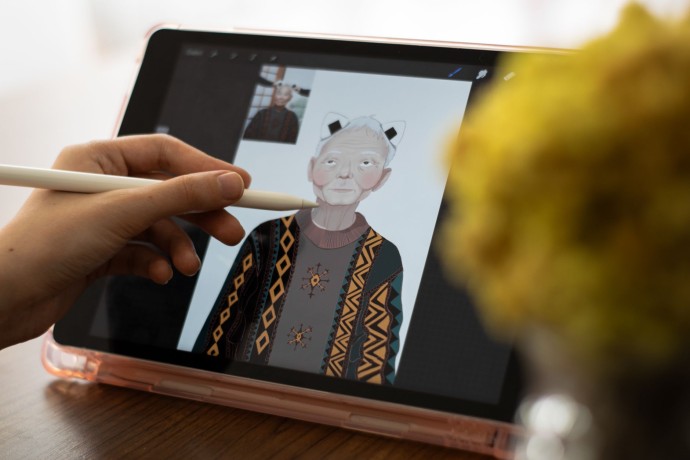
Refinement Stage: Structure, Consistency, and Art Direction Lock-In
Route to refinement-stage tools after a concept direction is chosen — when the question becomes how do we make this repeatable, fixable, and on-brief? Refinement is where art direction bites: exact palette adherence, anatomical corrections, perspective alignment, brand symbol placement, iterative feedback from creative review without losing the approved composition. This stage optimizes for controlled change, not surprise.
Inpainting, outpainting, and mask-based edits are refinement primitives. Use them to adjust hands, faces, props, signage, and local lighting while holding global layout stable. Reference chaining and seed discipline belong here — same character across panels, same architectural module across environment kit pieces, same line weight family across spot illustrations. Tools with sketch guidance, depth maps, and pose references reduce the roulette of full regeneration.
Style consistency features — custom model fine-tunes, LoRA adapters, trained character embeddings, organization style tokens — earn their cost at refinement stage, not moodboard. Volume justifies training: a twelve-asset campaign, a comic chapter, a game biome set, a seasonal brand drop. The routing rule is no new directions without director sign-off; refinement tools amplify execution of locked direction, they do not reopen fork debates.
Collaboration workflows matter. Refinement happens in loops with art directors, brand reviewers, and sometimes legal — export annotated stills, iterate masked regions, compare v3 against v2 with visible diff habits. Layer-friendly outputs and non-destructive edit histories reduce pain when feedback arrives as "move the logo up" not "start over." Pair generative refinement with traditional tools — Photoshop, Clip Studio, Procreate, Blender grease pencil — where human touch still wins on micro-detail.
Tool class guidance for refinement: favor region edit precision, reference fidelity, version history, and repeatable presets tied to project IDs. Deprioritize high-variation "surprise me" modes that scramble approved layouts. Measure success by revision rounds to approval, consistency scores across related assets, and art director hours spent fixing anatomy or symbol errors — not generation novelty.
Deliverable Stage: Production-Ready Output and Handoff Standards
Route to deliverable-stage tools when files must survive people who never saw the moodboard — printers, developers, animators, marketplace QA bots, localization vendors. The optimization target is spec compliance and traceability: correct dimensions, color profiles, alpha channels, vector paths, rig-ready layers, metadata, and licensing documentation. Generation novelty is irrelevant; predictability is everything.
Upscalers, denoisers, and print prep tools belong here when raster resolution must jump from approved comp to billboard or packaging plate — provided upscaling does not invent illegible micro-text or fabric patterns that fail QC. Background removal and matte extraction serve deliverables when products or characters must composite into templates. Vectorization assists — not autopilot — help when spot illustrations must become SVG icons without hand-redrawing every curve from scratch.
Deliverable stage is where automation meets human sign-off. Batch export presets for social crops, safe margins for app store overlays, and naming conventions tied to DAM IDs should be documented in the routing table. AI assists that batch-resize, recolor for seasonal variants, or localize mock text still require human QC for claims, trademarks, and cultural nuance. Nothing ships because the model stopped hallucinating yesterday; it ships because a named approver checked the checklist today.
Handoffs define deliverable success. Game art exports with normal maps and roughness channels; animation receives layered PSDs with separated hair, face, and costume; marketing receives CMYK proofs with spot colors identified; publishers receive cover files with bleed and barcode zones reserved. The routing table should list required deliverable packages per project type and which AI tool classes may touch each file class — often "none on final text layers" or "AI background only, product plate locked."
Tool class guidance for deliverables: prioritize color-managed export, batch processing, integration with DAM and production trackers, and audit logs for model version and seed. Deprioritize exploratory generators without enterprise retention policies. Measure success by first-pass acceptance from downstream teams, reprint or reimport rates, and legal clearance speed — not internal wow factor.

Matching Tool Classes to Stages: A Practical Assignment Matrix
Think in tool classes rather than brand names that expire next quarter. Moodboard stage: rapid text-to-image samplers, collage assistants, palette extractors, internal-only thumbnail generators. Concept stage: reference-conditioned diffusion, layout compositors, image-to-image with controlled strength, presentation-ready still exporters. Refinement stage: inpainting suites, outpainting for aspect ratio fixes, consistency adapters, pose and depth-guided editors. Deliverable stage: upscalers, background removal, batch resize and crop automation, vector assist, metadata-preserving export pipelines.
Assign primary and secondary classes per stage — at most two primaries to avoid decision fatigue. Example: moodboard primary is fast sampler plus board integration; secondary is style mashup for gap filling. Concept primary is reference-conditioned generator; secondary is compositor for type and layout tests. Refinement primary is mask editor with project presets; secondary is trained style adapter. Deliverable primary is color-managed upscaler and batch exporter; secondary is matting tool for compositing stacks.
Explicit anti-routes prevent expensive mistakes. Do not assign deliverable upscalers at moodboard. Do not assign high-variation concept engines during refinement lock. Do not assign untrained text-to-image for final packaging text. Do not assign exploratory tools without audit trails for client-facing deliverables. Anti-routes belong in the same doc as primaries — producers remember "do not" faster when staging feels urgent.
Escalation columns complete the matrix. When do assets leave AI and go to illustrators, retouchers, 3D artists, or photographers? Triggers: anatomy wrong after two masked passes; brand symbol distorted; text must be legally exact; character must match an existing canon model sheet; deliverable fails print proof. Escalation rules protect schedules from infinite AI iteration loops that never reach spec.
Review the matrix monthly against ticket tags — moodboard, concept, refinement, deliverable — and rework logs. Mis-staged work shows up as reopen rate and hours logged after supposed approval. Procurement should align contracts to stage primaries: exploration credits priced differently from production seats with retention and indemnity clauses. A tool that wins moodboard love but never survives deliverable QC is a workshop toy, not pipeline infrastructure.
Handoffs, Metadata, and Version Control Between Stages
Pipeline routing fails when files cross stages without context luggage. Every handoff should carry: stage label, chosen direction ID, reference image hashes, seed and model version when applicable, approver name, and known open issues. Moodboard exports should not masquerade as concepts — watermarks or filename prefixes like EXPLORATORY prevent executives from treating thumbnails as commitments.
Concept-to-refinement handoff requires a lock document: approved still, palette hex codes, composition grid, forbidden motifs, and negative prompts derived from review comments. Refinement-to-deliverable handoff requires a spec sheet: pixel dimensions, color space, layer naming, deliverable checklist owner, and downstream consumer contact. Missing lock documents cause refinement tools to reinterpret direction; missing spec sheets cause deliverable tools to upscale the wrong crop.
Version control habits from software apply to art AI. Store seeds, adapter weights, and prompt prefixes alongside DAM entries. When a campaign revives six months later, reproducibility beats archaeology. Some jurisdictions and clients restrict generative metadata retention — legal should sign off on what you store. Routing docs must note compliance constraints per stage, especially for deliverables with publicity rights and training-data disclosure requirements.
Cross-stage assembly order prevents compound errors. Build truth-first plates — logos, products, canon characters — as locked layers before generative backgrounds or effects. Illustrative flares sit above concept-approved layout, not baked into irreversible merges early. UI or type compositing happens last when deliverables include mixed media. Single-shot prompting that blends mood, concept, layout, and spec is how labels warp and hierarchies collapse.
Train producers on stage failure signatures. Moodboard failure: everything looks like mid polish but nothing is choosable. Concept failure: directions blur together without fork clarity. Refinement failure: global composition shifts when fixing local detail. Deliverable failure: specs pass visually but fail import, print, or legal review. A one-page "switch stage or switch tool when you see…" guide beats forum prompt roulette.
Quality Gates Before Work Advances or Ships
Each stage needs a QC gate tuned to its purpose — not one generic "looks good." Moodboard gate: diversity of references, cliché check, brief alignment on tone, no accidental client-facing export. Concept gate: distinct labeled directions, narrative or brand logic sanity, thumbnail legibility where relevant, director pick recorded. Refinement gate: consistency across related assets, anatomy and symbol review, no drift from lock document. Deliverable gate: spec checklist, color proof, downstream test import, legal text and likeness clearance.
Build gates as checklist stages in project tools, not verbal Slack approval. Require named roles: creative director for concept picks, art director for refinement release, production lead for deliverable sign-off, legal for public-facing claims embedded in art. AI output should not skip gates because it is "just internal" — internal leaks become social posts.
Automate supporting checks without pretending they replace judgment. Palette distance against brand tokens, resolution and bleed validators, solid-background marketplace rules, contrast checks when type is final. Automation flags; humans decide whether a metaphor crosses a cultural line, whether a prop period is wrong, whether a game silhouette reads at target resolution.
Track defect categories in rework logs tagged by stage. If concept defects dominate, moodboard handoffs are vague or concept tools lack reference discipline. If deliverable defects dominate, refinement allowed illegal text or specs were never documented. QC data should feed the assignment matrix quarterly — living routing beats ornamental routing.
Define rollback paths per stage. When concept review stalls, return to moodboard with explicit new constraints — do not refine a dying direction. When deliverable QC fails near launch, pre-approved human retouching or illustrator escalation prevents midnight subscription shopping. Rollback rules preserve morale and budgets when AI hits its ceiling.
Rolling Out Stage-Based Routing in Creative Teams
Start with a two-week shadow period. Producers tag work by stage in tickets without changing tools. Leaders review mis-tags — if everything is labeled refinement, your briefs are ambiguous or approvals are fuzzy. Then enforce routing on new projects only; grandfather rush jobs to avoid rebellion. Publish the stage matrix inside creative intake forms so routing is default, not a lecture in a kickoff meeting.
Run paired pilots across stages: one art director on moodboard-to-concept flow, one senior illustrator on refinement presets, one production artist on deliverable automation. Each pilot logs time-to-gate, defect types, tool switches, and credit spend. Pilots become internal case studies more persuasive than vendor demos. Celebrate narrow wins — "cut concept review cycles by a third" — not generic enthusiasm for generation volume.
Align freelancers and agencies to your stage map. External partners often import favorite tools that break consistency and metadata standards. Contracts should require stage-appropriate deliverables and checkpoints regardless of toolchain. Provide lock documents, spec sheets, and prompt libraries — secrecy hurts less than unreproducible finals.
Budget and license by stage. Exploration credits for moodboard and concept sit in creative department lines; production seats with retention and export features sit in studio operations. Chargeback clarity reduces shadow subscriptions and duplicate upscalers bought by individual artists who bypass DAM policy.
The end state is deliberately boring: a producer reads a brief, identifies the stage in seconds, opens the right template, attaches stage-appropriate inputs, uses assigned tool classes, passes the stage QC gate, and hands off with metadata the next stage trusts. From moodboard to deliverable, art AI stops being a parade of miracles and becomes dependable infrastructure for creative professionals who still owe clarity to collaborators and quality to audiences.
Browse AI tools in this category on AIToolsMatic.